
Vision and Motor Precision: Why Hand-Eye Coordination Is an Athlete’s Core Tool
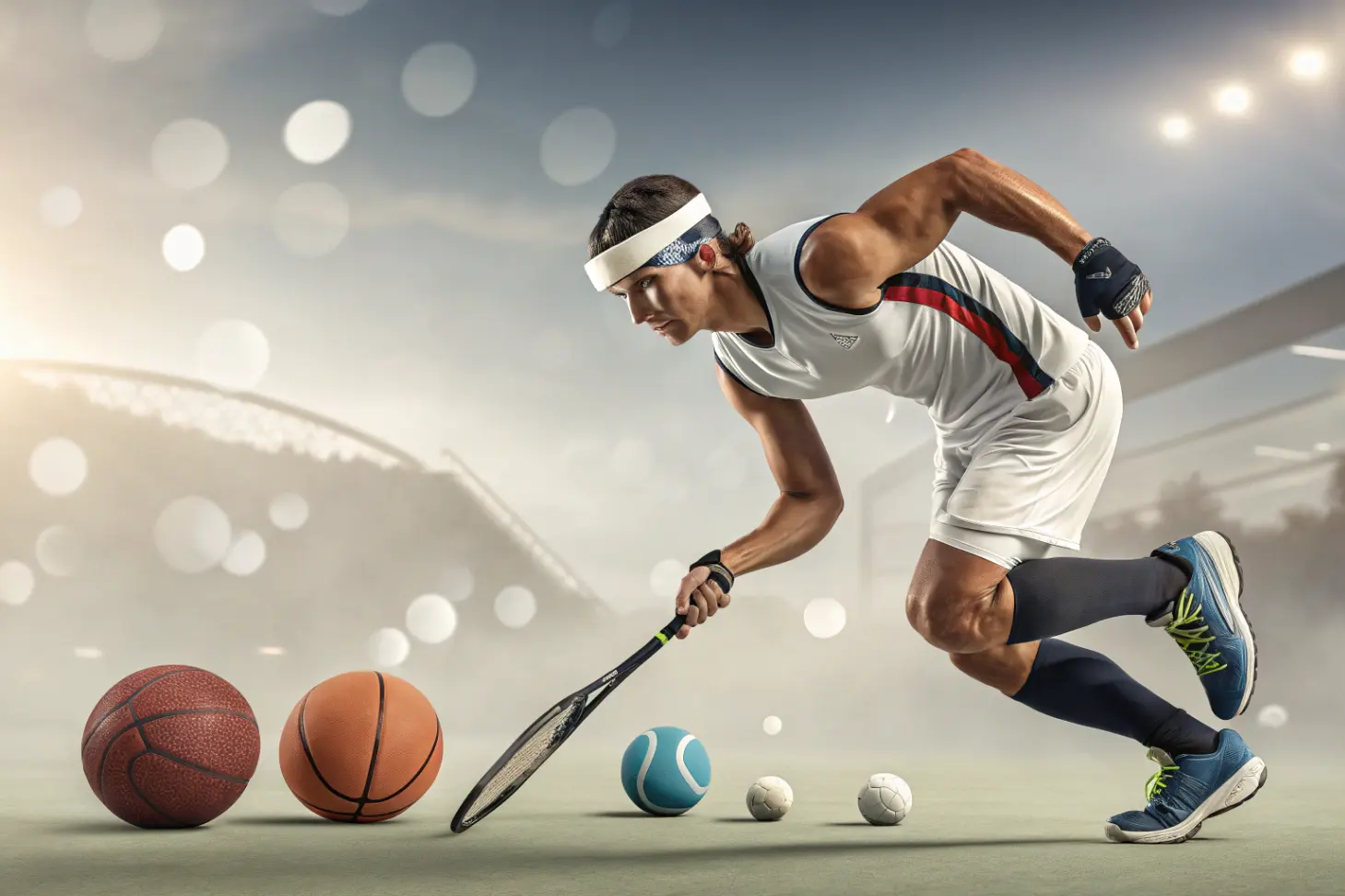
Elite performance in any sport begins with the athlete’s ability to see, interpret and act on visual information faster than opponents. Vision is not simply about eyesight; it encompasses depth perception, motion tracking, spatial awareness and the cognitive ability to convert visual cues into movement.
These capabilities collectively shape what coaches call “hand-eye coordination,” a term often used but rarely broken down into its underlying components. In competitive environments where milliseconds determine outcomes, an athlete’s visual system becomes the silent engine behind every successful action.
How Visual Processing Shapes Accuracy
To understand why sight influences precision, we must explore the pathway from perception to execution. When an athlete identifies an incoming ball, a moving opponent or a shifting tactical pattern, the brain rapidly interprets these signals and plans the appropriate response. This process involves the integration of central and peripheral vision, rapid focus transitions and predictive capabilities that allow the brain to estimate where an object will be rather than where it currently is. The smoother these processes are, the more fluid and accurate the athlete’s movements become. Sports scientists note that visual processing speed is a strong predictor of performance in disciplines such as tennis, football, baseball and martial arts, where athletes must make fast and correct decisions under pressure.
Core Components of Hand-Eye Coordination
Hand-eye coordination relies on several interconnected abilities that athletes refine over years of training. These components include dynamic focus, visual tracking, depth estimation and kinesthetic awareness. Each plays a distinct role in how athletes time their movements and execute with precision. As the complexity of sports increases, these elements become even more vital, particularly for athletes who must react to unpredictable patterns. To illustrate how these foundations collaborate, the following list summarizes the essential skills that form the backbone of high-level coordination:
- Dynamic focus that allows quick changes of attention between near and far objects.
- Smooth tracking of moving elements such as balls, opponents or changing tactical patterns.
- Spatial and depth awareness for estimating distances, angles and timing.
- Proprioceptive accuracy enabling the body to align its movements with visual input.
These skills interact continuously, allowing athletes to convert raw visual data into coordinated, controlled and efficient movements. The stronger these foundations, the more confidently an athlete can respond to fast-paced competition and complex game scenarios.
The Role of Visual Training in Athletic Development
Because natural eyesight varies among individuals, modern sports science emphasizes structured visual training to improve performance. Vision coaches use specialized drills, stroboscopic glasses, reaction-time devices and VR-based simulations to enhance perceptual speed and motor precision. These methods challenge the brain to process information under difficult conditions, strengthening both accuracy and adaptability. Programs like these are increasingly common in professional academies, especially in sports where precision defines success, such as baseball pitching, basketball shooting or fencing.
Before examining how athletes apply these training outcomes, it is useful to compare the key visual skills and the athletic qualities they support. The table below provides a simplified overview that helps connect theory with practice.
Key Visual Skills and Their Athletic Impact
| Visual Skill | Description | Athletic Impact |
|---|---|---|
| Dynamic Focus | Rapid shifting of eye focus between varying distances | Improves reaction to changing play conditions |
| Peripheral Awareness | Ability to detect movement beyond direct gaze | Enhances defensive anticipation and positioning |
| Depth Perception | Understanding distance and spatial relationships | Sharpens timing in strikes, passes and interceptions |
| Motion Tracking | Following fast or unpredictable movement | Increases accuracy in catching, striking or blocking |
| Visual Decision Speed | Processing and acting on visual cues quickly | Supports quicker tactical choices and reduces errors |
This comparison highlights how vision operates as the base layer beneath all athletic decisions and mechanical execution. When athletes target these skills systematically, their movements gain efficiency, reducing wasted steps and improving consistency under pressure.
Applying Visual Precision in Real Game Scenarios
In real competition, athletes experience a constant stream of visual stimuli. They must process not only the primary target—such as a ball or opponent—but also contextual cues like spacing, acceleration, team structure and approaching threats.
Precision emerges when their eyes and body work together seamlessly, transforming perception into movement without hesitation. For example, a basketball player executing a no-look pass relies heavily on peripheral vision and spatial mapping, while a striker in football uses predictive tracking to determine the optimal moment to strike the ball. Even endurance athletes depend on visual-motor precision, particularly in activities such as cycling or skiing, where reading terrain and adjusting movement can determine both performance and safety.
Building Long-Term Coordination and Vision Strength
Athletic vision is trainable, and long-term development requires consistent, structured practice. Coaches emphasize repetition of visual-motor drills in combination with sport-specific actions to ensure that improvements translate into real performance gains. Over time, athletes learn to sharpen focus, reduce decision-time delays and maintain clarity under fatigue. These long-term adaptations form the basis for sustained excellence. Vision, therefore, is not merely a supporting ability but a central component of the athlete’s entire performance ecosystem. A well-trained eye produces a well-timed action, and together they create the precision that separates elite performers from the rest.
Conclusion
Hand-eye coordination is more than a useful skill; it is the architect of movement, reaction and decision-making in every sport. By understanding how visual processing influences accuracy and by applying targeted visual training, athletes unlock higher levels of precision and control. As sports continue to evolve, the ability to interpret visual information quickly and accurately will remain one of the strongest predictors of athletic success.