
3D Vision and Stroboscopic Therapy: The Future of Visual Training
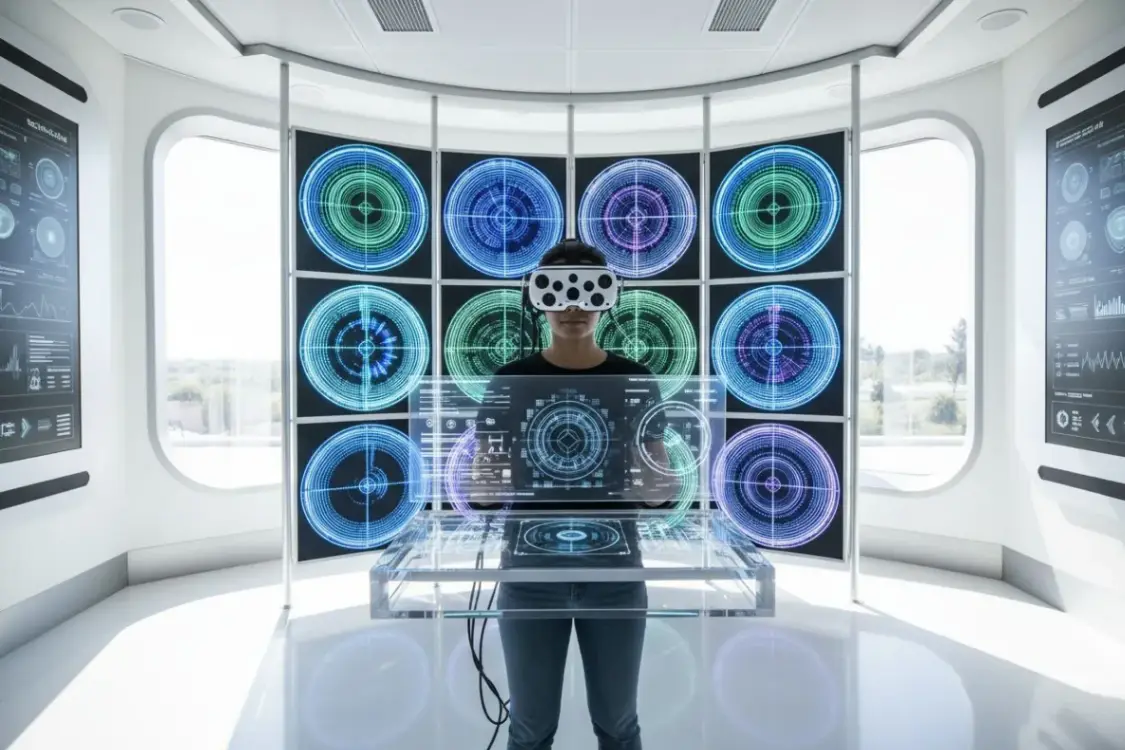
In the past decade, human vision training has evolved from simple eye exercises into a sophisticated discipline grounded in neuroscience and advanced optics. Today, 3D vision and stroboscopic therapy represent two of the most promising innovations in enhancing visual performance for athletes, professionals, and individuals recovering from visual impairment. What makes these methods remarkable is their ability to go beyond the surface of the eye and target the brain’s perceptual systems — effectively rewiring the way we see, react, and interpret the world.
Unlike traditional approaches that focus purely on correcting refractive errors or improving acuity, modern vision training aims to develop the dynamic aspects of sight — depth perception, reaction time, focus switching, and spatial awareness. These skills are essential not only for high-performance athletes but also for surgeons, pilots, and even gamers who rely on rapid visual processing.
Understanding the Science Behind 3D Vision Training
3D vision training is built upon the principle of binocular disparity — the difference between the images seen by our two eyes. This disparity allows the brain to construct a three-dimensional representation of the environment. However, many individuals, even those with perfect vision, lack efficient depth perception. Through controlled 3D stimuli and exercises, visual therapists help retrain the eyes and the brain to work in perfect synchrony.
In practical terms, 3D training often involves virtual reality headsets or augmented-reality glasses that simulate real-world environments. The user must respond to moving targets or shifting spatial cues, forcing the visual system to adapt. Over time, the exercises improve not just depth perception but also eye-hand coordination and visual endurance.
What’s particularly fascinating is how neuroplasticity plays a role. Studies have shown that the brain can be conditioned to process depth and spatial data more efficiently with repeated exposure to 3D environments. As a result, even individuals with amblyopia (lazy eye) or convergence insufficiency can regain balanced binocular function.
How Stroboscopic Therapy Enhances Visual Processing
Stroboscopic therapy, sometimes referred to as strobe light training, works on a completely different mechanism. By intermittently blocking visual information, usually through flickering lenses, this therapy forces the brain to make faster and more efficient decisions with limited visual input. The logic is simple but powerful: when the visual stream is interrupted, the brain must compensate by processing and predicting movements more efficiently.
This method is often applied in sports where reaction time is critical. For instance, basketball players use stroboscopic glasses during drills to sharpen focus and timing, while goalkeepers train with them to improve anticipation. The therapy creates a controlled sensory deprivation environment that enhances visual memory, concentration, and neural speed.
Before the introduction of stroboscopic tools, visual reaction training relied heavily on continuous feedback. However, the new intermittent model provides a form of neural resistance training, comparable to lifting weights for the brain’s visual pathways.
Combining 3D Vision and Stroboscopic Methods
The synergy between 3D vision and stroboscopic therapy represents the cutting edge of modern visual training. When these two techniques are integrated, they engage both the spatial and temporal aspects of vision simultaneously. The 3D component strengthens depth and coordination, while the stroboscopic element enhances reaction and prediction under visual stress.
For athletes, this combination translates into tangible performance benefits: quicker decision-making, improved object tracking, and heightened situational awareness. In rehabilitation, the approach has shown potential in retraining the visual cortex after injury or stroke, as well as in treating visual neglect disorders. The adaptability of these tools makes them suitable for personalized training programs that evolve with the individual’s progress.
The Technological Foundation of Visual Training
Behind these advancements lies an intricate mix of neuroscience, optical technology, and data analytics. Virtual reality systems now offer precise calibration of depth cues and latency control, allowing for accurate 3D simulation of dynamic environments. Meanwhile, stroboscopic glasses can adjust flicker frequency to match the user’s performance level, creating a customizable cognitive challenge.
The role of AI-driven analytics is growing as well. By tracking eye movement patterns, fixation points, and reaction times, these systems provide immediate feedback and long-term progress data. Therapists can now pinpoint exactly which visual functions need reinforcement and adjust exercises in real time.
Applications Beyond Sports and Rehabilitation
While athletes and patients remain the primary users, 3D and stroboscopic training methods are rapidly finding applications in other sectors. Pilots use these systems to simulate spatial disorientation; surgeons employ them to refine precision in depth-dependent tasks; and even eSports players benefit from faster on-screen recognition and reduced fatigue.
For the general public, these techniques are also entering wellness and preventive health. As screen time increases, our visual systems are under constant strain, leading to issues like digital eye fatigue and reduced convergence ability. Incorporating short sessions of 3D visual training or strobe-based drills could help maintain long-term ocular health and cognitive alertness.
Midpoint Reflection: Comparing the Two Methods
To understand how these two visual training approaches differ yet complement each other, let’s look at a concise comparison.
Before the table, it’s important to note that while both techniques aim to enhance vision, they target distinct neural mechanisms. 3D vision training primarily strengthens spatial processing and eye coordination, while stroboscopic therapy improves temporal prediction and neural efficiency. Together, they create a balanced and resilient visual system.
| Feature | 3D Vision Training | Stroboscopic Therapy |
|---|---|---|
| Core Mechanism | Enhances depth perception via binocular exercises | Interrupts visual flow to enhance cognitive prediction |
| Primary Benefit | Improves spatial accuracy and focus alignment | Boosts reaction speed and neural efficiency |
| Tools Used | VR/AR headsets, stereoscopic displays | Strobe glasses with variable flicker frequency |
| Key Users | Athletes, patients with binocular disorders, surgeons | Athletes, pilots, eSports players |
| Cognitive Effect | Develops precise depth mapping in the brain | Strengthens anticipatory processing under pressure |
After examining the table, it becomes evident that 3D and stroboscopic methods, though distinct in technique, converge on one core goal: training the brain to see smarter, not just clearer.
The Neuroscience Behind Vision Training
Both 3D and stroboscopic therapies rely heavily on the brain’s ability to reorganize its pathways — a phenomenon known as synaptic plasticity. By repeatedly challenging perception, these techniques trigger adaptive responses in the occipital lobe and parietal cortex. Over time, the brain learns to extract more relevant information from fewer visual cues, reducing mental load during fast-paced activities.
Research suggests that visual neurons can change their firing rate depending on the difficulty of the visual task. When exposed to stroboscopic interruption, they develop enhanced temporal precision; when exposed to 3D stimuli, they strengthen depth correlation. This dual adaptation results in an overall improvement in perceptual accuracy and visual confidence.
A Practical Example: Training Routines
In a professional training environment, sessions often start with 3D exercises to warm up the visual system. These might include tracking moving objects in a simulated 3D space or performing focus adjustments on varying depths. Once the eyes are synchronized, the trainer introduces stroboscopic glasses, gradually increasing flicker frequency to challenge the participant’s ability to maintain accuracy under reduced visual conditions.
To illustrate, consider this list of typical progression stages within a combined training routine:
Baseline 3D Depth Calibration – assessing binocular alignment through controlled depth cues.
Dynamic Object Tracking – following moving targets while maintaining depth perception.
Reaction Drills with Strobe Glasses – performing physical responses during flicker intervals.
Complex Coordination Tasks – merging motor, cognitive, and visual timing in one environment.
Each of these stages builds upon the previous one, ensuring a smooth transition from visual comfort to high-performance challenge. The list above highlights how structured exposure can lead to measurable cognitive and visual gains.
Future Perspectives and Innovation
The frontier of visual training is moving rapidly toward integrated neural optimization. Developers are already working on adaptive headsets that blend real-time 3D rendering with stroboscopic modulation based on biometric feedback. Imagine a headset that increases flicker intensity as your brain becomes more efficient — essentially a smart trainer for your visual cortex.
Moreover, emerging research in neurovisual AI could pave the way for personalized vision maps, where exercises are auto-generated based on the user’s eye movement data and performance analytics. This approach holds immense promise for both clinical and athletic settings, as it bridges the gap between subjective experience and objective improvement.
Psychological Benefits of Vision Training
Beyond physical and neural enhancements, visual training offers psychological rewards. Participants frequently report increased confidence, faster decision-making, and greater mental clarity after consistent sessions. This happens because vision is not just about seeing — it’s about understanding the environment. By training perception, individuals develop a deeper sense of spatial awareness, which translates into more decisive actions and better situational control.
In sports psychology, this effect is known as visual dominance — the ability to anticipate outcomes based on limited cues. Through 3D and stroboscopic conditioning, athletes often achieve this state faster and sustain it longer during competition.
Challenges and Ethical Considerations
While the potential of visual training is immense, its application requires responsibility. Overuse or incorrect calibration of stroboscopic flicker rates can cause eye strain or discomfort. Similarly, prolonged exposure to artificial 3D environments without proper rest intervals may lead to visual fatigue. Therefore, programs must be designed and monitored by qualified vision specialists who understand both the physiological and neurological limits of the user.
Another challenge lies in accessibility. High-end VR and strobe equipment remain costly, restricting their availability to elite institutions and professional teams. However, as the technology becomes more mainstream, it is expected that consumer-grade models will make advanced visual training affordable and widely available.
The Road Ahead
Looking forward, the fusion of 3D vision, stroboscopic therapy, and AI analytics is likely to redefine how we approach human visual capability. The next decade may see vision training become as common as physical workouts, with personalized sessions integrated into wellness routines and professional development.
This evolution reflects a larger trend in human performance — the shift from training the body to training perception. As we move deeper into the digital age, mastering how we see may become as vital as mastering how we think.
Conclusion
3D vision and stroboscopic therapy are not just medical or athletic innovations — they mark a turning point in our understanding of perception itself. By merging optical science, neuroplasticity, and technology, these methods give us the ability to fine-tune one of humanity’s most powerful senses. Whether it’s a surgeon in the operating room, an athlete on the field, or a patient recovering from injury, visual training opens new possibilities for sharper, faster, and more adaptive human performance. The eyes may be the window to the soul, but now, they are also the gateway to a smarter brain.